Writing
How to actually take a break in a fight (and why most break attempts fail)
A clinician's guide to mid-argument time-outs: why most attempts fail, what to agree on before you need one, and how to return to it well.
Clinically reviewed by Tanner Oliver, LCSW
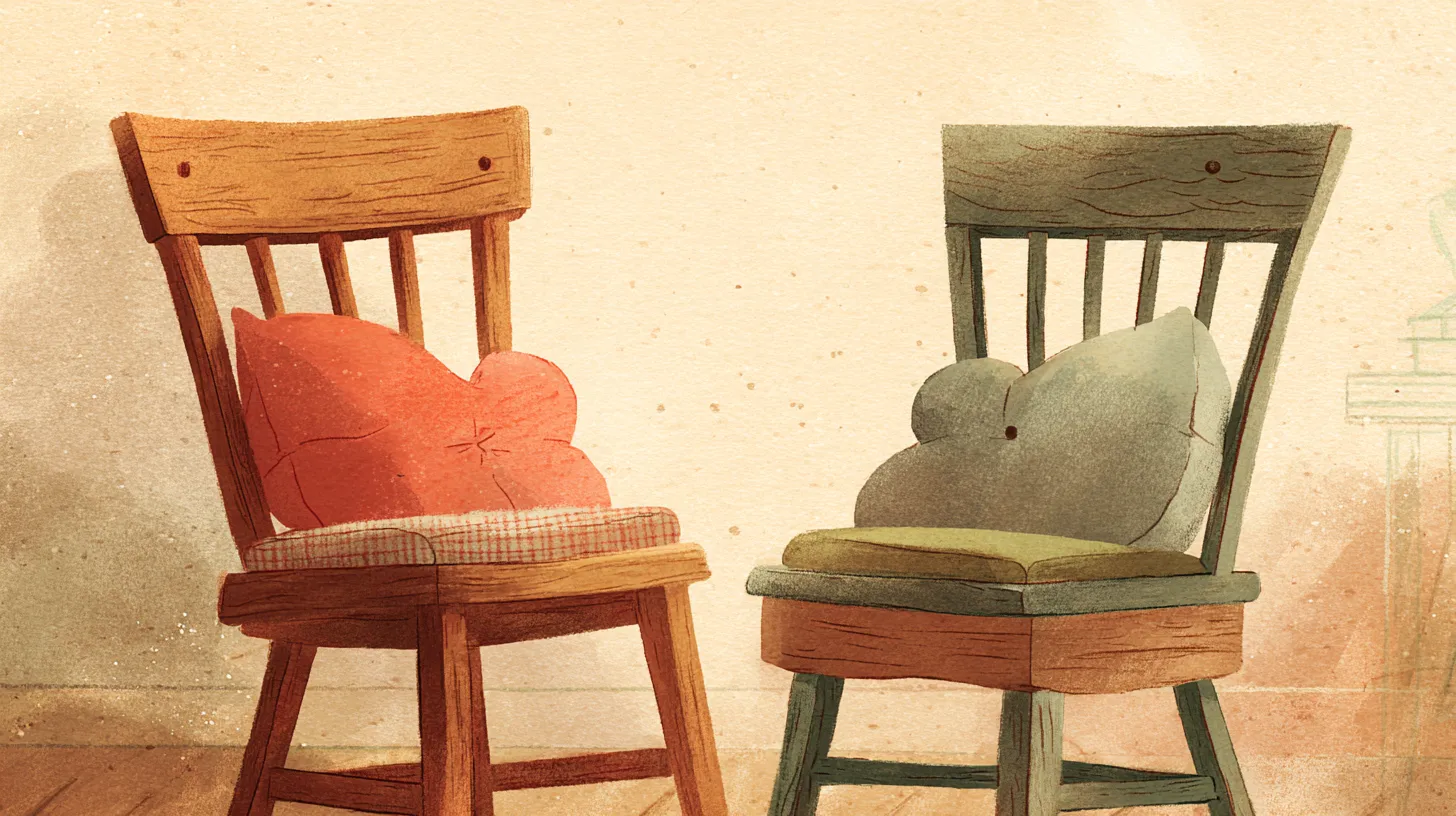
Taking a break in a fight should be one of the simplest skills in a relationship. You notice the conversation is getting worse. You pause. You come back when you’re both calmer. Everyone wins.
In practice, for most couples, it’s one of the skills that fails most often. The break gets called and then the break itself becomes a new source of conflict. One partner leaves the room and the other feels abandoned. One partner says “I need a minute” and the other hears “I’m dismissing you.” The break stretches to an hour, then two, then the rest of the evening. When the couple reconvenes, the conversation doesn’t resume — either because one partner is still too activated, or because both partners are pretending the fight didn’t happen.
These are not exotic failure modes. They are the normal way breaks break down. And they happen because almost no one thinks through the mechanics of a break before they need to take one.
This piece is about the mechanics. What a break actually is, what it isn’t, and how to set one up so that it does what it’s supposed to do.
Why you need a break in the first place
There is a point in a fight where your body takes over. Anger narrows attention and makes it harder to see your partner’s point of view, and acute stress makes it harder to hold information in mind and think flexibly. You know that point from the inside: your chest is tight, your ears are hot, your thinking has narrowed, and the next thing you’re about to say is not the thing you would have said ten minutes ago.
Past that point, your brain is not running the “engage with a loved one” program. It is running the “manage a threat” program. You can force yourself to stay in the conversation through willpower, but you are not doing the conversation any good. Whatever you say will be sharper than you intend, and whatever your partner says will land harder than it should.
This is why couples therapists — and the DBT literature — are so insistent about breaks. Not because the conversation doesn’t matter. Because your nervous system is not, in this moment, capable of having the conversation well. A break is the only tool that changes that fact. No amount of calm-sounding communication is going to regulate a body that is this activated. You have to calm down first, and then talk.
Why most break attempts fail
Four predictable failure modes:
Failure one: no prior agreement. The break is invented in the middle of the fight, by one partner, unilaterally, using words both partners are hearing for the first time. The partner receiving the break request has no framework for it and interprets it through whatever lens the fight has put them in — usually “you are punishing me” or “you are running away.”
Failure two: no return time. One partner says “I need a minute” and walks out. The other partner sits with no information about when the conversation resumes, or whether it resumes. This uncertainty produces more activation, not less. The person left behind often becomes more flooded during the break than they were during the fight, because the ambiguity is doing more work on their nervous system than the conflict was.
Failure three: no skill use during the break. The partner who called the break steps into the next room and… does what, exactly? Ruminates. Rehearses counter-arguments. Scrolls their phone while the body stays activated. Twenty minutes later they come back with a body that’s still activated, a head now full of fresh grievances, and the fight immediately re-escalates from a higher floor than it had before.
Failure four: no re-entry plan. The partners come back together and one of three things happens. They avoid the topic, relieved for the reprieve, and the underlying issue goes unaddressed. They dive straight back into the fight where they left it, as if the break had never happened. Or one partner tries to reopen the conversation while the other is hoping it’s over, and they mis-time each other, badly.
Any of these is enough to blow up a break. Combined, they are why couples often develop a learned aversion to the whole tool.
What a break actually needs to be
The break that works is not improvisational. It is a structured, agreed-upon, finite pause, with specific activities during it, and a specific re-entry protocol.
Here is what each piece looks like.
One — agree on it before you need it
The most important work happens in a quiet Sunday evening, not in the middle of a fight. Sit down with your partner, at a moment when nothing is activated, and establish a shared language for breaks. This is not a conversation about your last fight. It is a conversation about how you want to handle the next one.
Decide together:
- A word or phrase that either of you can say to call a break. Simple. Short. Not already loaded. Some couples use a code word — “timeout” or “pause” or the name of a city that means nothing to anyone but you. The point is that when either partner says it, both partners know what it means: I need us to stop this conversation right now and pick it up in a specified amount of time.
- What counts as the minimum break length. Twenty minutes is a sensible floor. Your body doesn’t calm down the moment the argument stops; stress hormones keep rising for a while after a stressful event begins. Shorter than twenty minutes and you are probably coming back before you are regulated.
- What counts as the maximum. Two hours. Most breaks land somewhere between twenty minutes and two hours; longer and the break starts to become avoidance.
- Who is expected to initiate the return. This is easy to miss and crucial to agree on. The default we suggest: the partner who called the break is the one who comes back at the stated time and reopens the conversation. This protects against the pattern where the partner who calls the break effectively uses it to end the conversation.
Write all of this down, somewhere you can both find it. The first few times you use a break, the written version is what you’ll reach for — not your memory of what you agreed, because the fight has temporarily unplugged your memory.
Two — call it clearly
When you are in a fight and recognize that you are too activated to keep going, the call is explicit.
“I’m getting flooded. I need to take our break. I’ll be back at 8:30.”
That’s it. Three sentences. What is happening in you. That you are invoking the agreed structure. When you will be back.
What the call is not: an assessment of the fight, an attempt to get in a last word, an accusation (“I need a break because you’re being impossible”), or a vague exit (“I can’t do this right now”). The words you use for the call are important. They are specifically designed to be non-inflammatory, informational, and followed by your absence.
The partner receiving the break does not have to agree with the timing. They can be annoyed that the break was called. They can want to keep going. But the break itself is not a negotiation — it’s a pre-agreed tool that either partner can invoke unilaterally. You agreed to this in the quiet Sunday conversation. This is that tool activating.
Three — physically separate
Leave the room. A different floor of the house if that’s available to you. Outside, if weather permits. Close a door between you.
Not because you’re running away. Because proximity keeps your nervous system engaged with the conflict. You cannot come down from an activated state while still in line of sight of the person who activated you. The separation is part of the mechanics.
If you share a small apartment and there isn’t a real second space, put on headphones. Face the wall. Do whatever reduces the felt proximity. The body needs the signal that it is no longer in the charged encounter.
Four — do something that regulates your body
This is the part most couples skip, and it is why most breaks fail.
A break is not a pause button. It is an active twenty minutes (or more) of doing something that calms your body down. If you spend the break ruminating — mentally rehearsing the fight, defending yourself against things your partner hasn’t even said, constructing the case for your point of view — you will be more activated at the end of the break than you were when it started.
What to do instead, in rough order of effectiveness:
- TIPP skills — cold water on the face, a burst of cardio, paced breathing. These directly regulate the nervous system.
- Physical movement. A walk around the block. Stretching. Even pacing, if done rhythmically rather than frantically.
- A sensory, absorbing activity that doesn’t require much thought. Washing dishes. Folding laundry. Weeding a garden. The activity occupies enough of your mind to stop the rumination.
- Nothing that requires screen time. Your phone will not regulate you. Scrolling through social media during a break keeps your nervous system in a half-activated scanning state. Putting the phone away is, for most people, the single highest-yield change.
The goal of the twenty minutes is one specific thing: to come back with a body that is capable of having the conversation. You know you’ve succeeded when your breathing has slowed, your muscles have softened, and the version of the fight in your head has become less vivid.
Five — use the last five minutes to plan your re-entry
In the final few minutes of the break, shift from regulation to preparation. Ask yourself three specific questions.
One — what is the actual thing I want to talk about? Often, by now, the heat of the fight has cooled enough that you can see what was underneath it. Sometimes the underneath is different from the surface. If the fight was about the dishes, the underneath might be about feeling uncared for. Name the underneath clearly.
Two — what is my ask or my offer? A conversation without a concrete ask goes in circles. Know what you are going to request, or what you are going to put on the table as a concession, before you walk back in.
Three — what do I want to apologize for, specifically? In any fight that went past productive, there is usually something you said or did that you regret — a tone, a word, an exaggeration. Name it to yourself now so that you can name it to your partner when you return. The apology does not require them to reciprocate. It just clears the specific thing from the field.
None of this is the conversation. This is the pre-work, done privately, so that the conversation can start well.
Six — return on time
This is not negotiable. You called the break for 8:30. You return at 8:30. Not 8:45, not 9:00, not “when I’m ready.” Punctuality on breaks is one of the highest-trust-building behaviors in a marriage, and lateness is one of the most corrosive. The partner left in the other room is, while waiting, constructing a story about whether you are coming back and what it means about the relationship. Coming back on time, every time, makes that story short and benign. Coming back late, repeatedly, makes it long and anxious.
The break ends at the time you named. If you’re still too upset to talk, come back at that time anyway and ask for a new break: “I’m still really upset. I need another twenty minutes. I’ll be back at 8:50.” That’s a new break, asked for out loud, not a failure. It’s vastly better than running over silently.
Seven — re-enter with a specific opener
The first words you say after a break matter disproportionately. The whole conversation will be weighted by them.
A good re-entry sounds something like:
“Okay. I’m back. Before we get into the substance — I want to apologize for the thing I said about your mother. That was below the belt and I didn’t mean it. Can we start over?”
What that sentence does: it acknowledges the break is over, it cleans up a specific piece of damage from the first round, and it invites a reset rather than a resumption. If your partner accepts the reset — and most partners will, given a clean opener — you are now having a different conversation than the one you paused.
From there, lead with the actual thing. Use DEAR MAN for the ask. Use the six levels of validation to hear your partner’s part. Keep your voice in the range you can sustain without spiking your heart rate.
A few edge cases
“What if my partner won’t agree to the structure?” Some partners have reactive responses to any proposed rule about fights — they hear it as being managed. If this is your pattern, don’t introduce the whole structure at once. Start with one piece. Say, “Can we try one thing — if either of us needs twenty minutes mid-fight, we take it and come back?” See how that goes before adding more.
“What if my partner keeps calling breaks to avoid hard conversations?” This is a real pattern, and it’s a misuse of the tool. If the break is functioning as an exit rather than a repair, the structure isn’t the problem — the structure is exposing something deeper about your partner’s relationship to difficult conversations, which is worth naming directly and, if needed, bringing into therapy.
“What if we keep skipping step four and the breaks aren’t working?” This is the most common issue. Try making step four more explicit. Agree, as a couple, that during a break each of you will do five minutes of paced breathing and a short walk. Make the skill concrete. Couples who systematize the middle of the break have dramatically better break outcomes than couples who leave it to improvisation.
“What if we can’t calm down in twenty minutes?” Some fights are big. Call a longer break: thirty minutes, an hour, up to two hours. If you still need more when the time is up, come back and ask for a new break. If you routinely need more than the maximum, the fights are probably covering something larger that needs individual attention, which is a useful piece of information in its own right.
What you are practicing
The technical piece of a break is regulation. The relational piece is something larger.
Every time you call a break, do it well, and return on time and in good faith, you are building a specific capacity in the marriage — the capacity to interrupt a bad pattern together and come back to each other. Over years, this adds up. Couples who have this capacity feel fundamentally different than couples who don’t. The fights are still there, but the fights no longer function as cliff edges. They are turbulence you can navigate because you have a reliable tool for getting out of the air long enough to land the plane.
That is worth practicing, on quiet weekends, before you need it. Which is the real lesson of this whole piece — the time to build this skill is the time when you don’t need to use it. Build it now. You will use it, and when you do, you will be grateful that the structure was there before the fight was.
This article is educational. It is not a substitute for therapy and does not establish a therapeutic relationship. If you are in distress, please reach out to a licensed clinician. If you are in crisis, call or text 988 in the US, or contact your local emergency services.
If you are in a relationship where you feel unsafe — if breaks get punished, if leaving the room leads to escalation — no communication skill is the right tool for that. Free confidential support is available from the National Domestic Violence Hotline.